
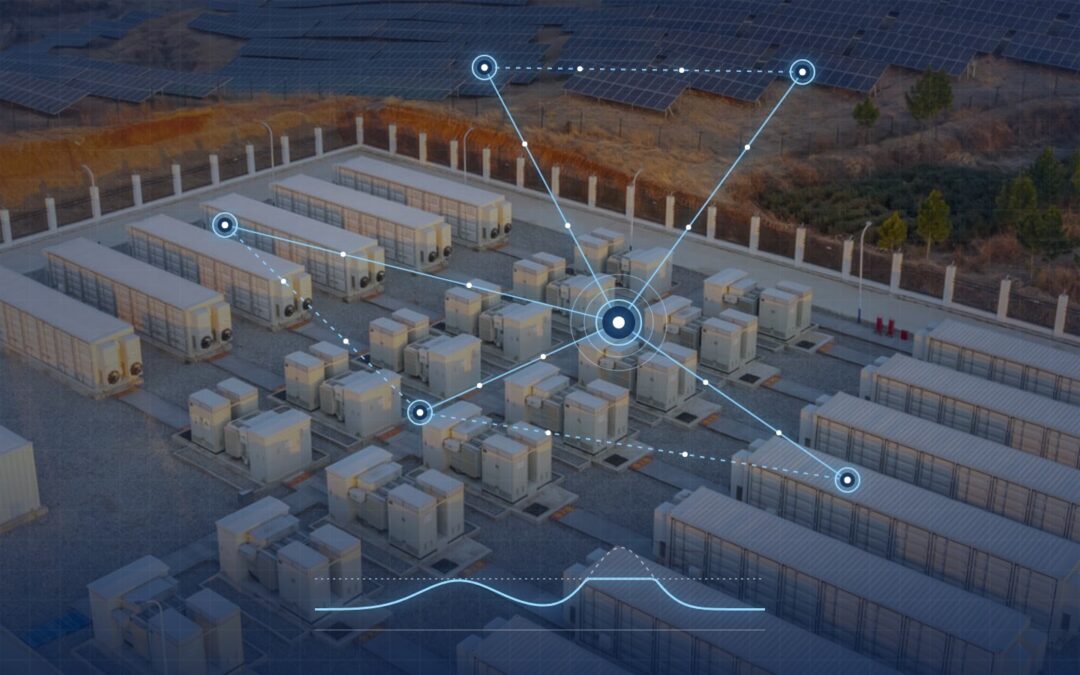
AI Microgrid Optimization for Commercial Solar + Storage: Checking the Expert Against the Math
How do you know a solar and battery design is the right size? At NextTech Kern, Agilitech and Opren.io checked an expert’s design against the math.
KEY TAKEAWAYS
- Demand charges, set by a site’s single highest moment of use, now often make up more than half of a California commercial electricity bill.
- Opren.io, founded by Dr. Ehsan Reihani, uses AI and an optimization engine to size solar, battery storage, and tariff together from a site’s own 15-minute interval data.
- On a Bakersfield Chrysler Jeep dealership, the engine beat an experienced developer’s design and cut monthly demand charges from $4,600 to $184.
- The output is a contractor-ready request for proposal, so owners can verify the math before they buy.
If you run a business in California, you have probably sat across from someone recommending a solar and battery system. They took photos of your electrical gear, looked at your bills, and came back with a size. It sounded reasonable.
But how do you know it’s the right size?
That was the question Agilitech Renewables Developer Bo Jones put to the room at NextTech Kern, the AI conference hosted by California State University, Bakersfield. He was speaking alongside Dr. Ehsan Reihani, founder of Opren.io. Their session, “AI-Driven Microgrid Optimization,” walked through a real project and ran the tool live.
Why is sizing a solar and battery system so hard?
A commercial electricity bill in California can carry as many as 20 separately calculated components. The one that matters most is the demand charge: what you pay for the highest power you draw at any single moment, not the total you use over the month. Twenty years ago it was a minor line item. Today it often makes up more than half the bill. (For the full ROI picture, see One Decision. Twenty Years of a Different Energy Story.)
Solar is good at cutting energy used over time, but it can’t promise to be producing at your moment of peak demand. A battery can. That is why most of the projects Bo works on pair the two, often as a microgrid.
The hard part is choosing the sizes. A developer has to weigh:
- Utility rates, the options inside each rate, and the alternatives a customer qualifies for
- How the site actually uses power by season and by hour, from 15-minute interval data
- Constructability: roof, carport or ground space, the electrical service, permitting, and operations
- Incentives, financing, and bankability
The usual process is a site visit, a load study, a few proposed configurations, and rounds of iteration until one looks right. “You could talk to the version of me at a dozen different companies,” Bo said, “and get 12 different outcomes.” From a purely computational standpoint, he added, it is very hard for a person to solve.
What does Opren.io do?
Opren.io is a software platform built to take that workload off the developer. Dr. Reihani described it in three steps:
- The user provides the inputs. Enter the site address and the platform pulls the baseline utility rate and applies the federal and local incentives for that territory. Upload a year of 15-minute interval data from the utility, plus solar and battery pricing. A HelioScope solar design can be added if one exists, but it is optional.
- AI prepares the data. It parses those different formats and hands clean data to the optimization engine.
- The engine solves for the best system. It tests configurations from no solar to every square foot the site can hold, and the same for batteries. It finds the solar and battery sizes with the strongest financial outcome within the site’s constraints, such as available space, service size, and construction duration.
When anything changes, whether a customer decision, a rate option, an interest rate, or a constructability limit, the optimization can be rerun in about a minute.
The output is a report covering the load analysis, financial analysis, and cash flow. It ends with a request for proposal page that any contractor can bid against. Utility rates are currently built in for PG&E and SCE, with more to come.
What did the optimizer find for a Bakersfield Chrysler Jeep dealership?
The team ran Opren.io on a project for a Chrysler Jeep dealership in Bakersfield, one of Bo’s clients. Roof space limited the solar to 124 kW, so the engine solved for the right battery within that limit.
| Result | As presented |
|---|---|
| Solar | 124 kW (limited by available space) |
| Battery | About 435 kWh |
| Monthly electricity cost, no system | About $9,000 |
| Monthly electricity cost, optimized system | About $4,100 |
| Monthly demand charges | $4,600 down to $184 |
The demand charge result came from three moves together: solar cut about $800, the battery about $2,800, and moving to a better tariff, which the engine evaluates as one of its decision variables, about $800 more.
The sizing itself mattered as much as the equipment. Choosing a battery a little away from the optimum changed the 30-year net present value by about $120,000.
Then Bo pointed to the chart that compared the designs. The blue was the engine’s answer. The red was his own proposal for the same client.
“That was the design that I had solved for and found that, to the best of my abilities, that was the optimal solution that ticked all the boxes. But in fact, the data has revealed that that was inaccurate.”
His point was not that experience doesn’t matter. It is that no one can test hundreds of configurations by hand, and the engine can.
Trust, but verify: what does this mean for business owners?
For a business owner, the value is a design you can check. The report lays out the system size, the configuration, and the financial case, backed by your own interval data. Bo put it this way: you can take it to any contractor and say, “Price me for this.”
“It’s a trust but verify step. Now you have something that can substantiate with evidence, empirical data, that this is actually the right solution.”
For Agilitech, it has become part of how the renewables team works. “My team uses this almost daily now,” Bo said. “It’s good to have expertise and experience, but also here’s the data. Here’s the facts. This is the math.”
Watch the full session
The complete NextTech Kern session, including the case study, the live demo, and audience Q&A.
If you are weighing solar, storage, or a microgrid for your facility, start with a conversation. The Agilitech renewables team can walk you through what the data says about your site.
FURTHER READING
For where business energy strategy is heading, read Microgrids After 2025: How Solar and Battery Storage Are Reshaping Business Energy Strategy in 2026.
Frequently asked questions
What is Opren.io?
A software platform founded by Dr. Ehsan Reihani that uses AI and optimization to size solar and battery systems from a site’s own interval data, rates, and constraints. Learn more at opren.io.
What data does it need?
A site address, a year of 15-minute interval data from the utility, and solar and battery pricing. A HelioScope design is optional.
How long does an optimization take?
About a minute to rerun when any input changes.
Which utilities are supported?
PG&E and SCE today, with more planned.
How does Agilitech use it?
Agilitech’s renewables team uses it almost daily to check and substantiate the systems it recommends.
About Agilitech
Agilitech is a licensed EPC firm (Engineering, Procurement, and Construction) with over 20 years of experience delivering critical infrastructure across renewable energy, water and wastewater, food and beverage, manufacturing, mining, and commercial sectors. Our solar + storage systems are custom-engineered for commercial and industrial facilities, backed by Tier-1 equipment, long-term monitoring, and a 2-year workmanship warranty. Headquartered in Kern County, California.
Renewables projects we’ve built
Solar and storage systems Agilitech has designed and delivered for commercial, industrial, and agricultural clients.
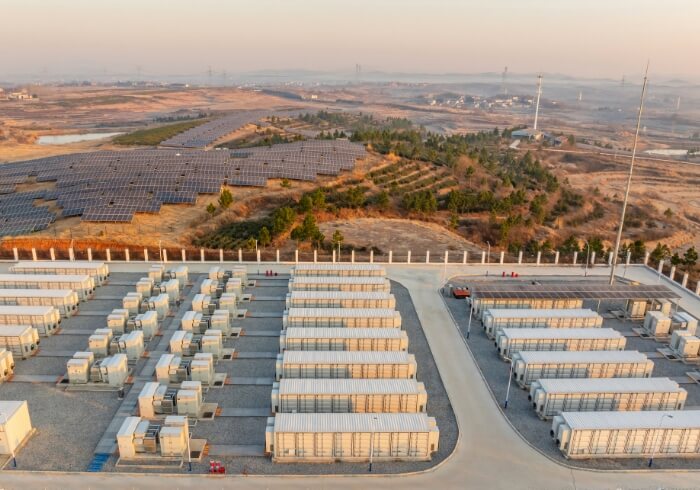
Solar + Battery System for a Construction Materials Company
Solar and battery storage for a high-demand facility facing steep utility rate increases.
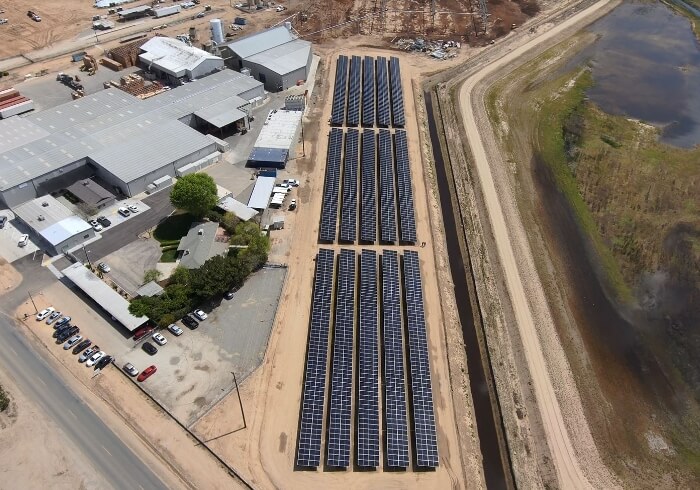
Industrial Solar for a Nut Processing Facility
Solar engineered around limited developable land, where energy is the highest input cost.

Ground-Mounted Solar for an Agricultural Client
A Central Valley almond grower balancing irrigation needs against volatile energy costs.
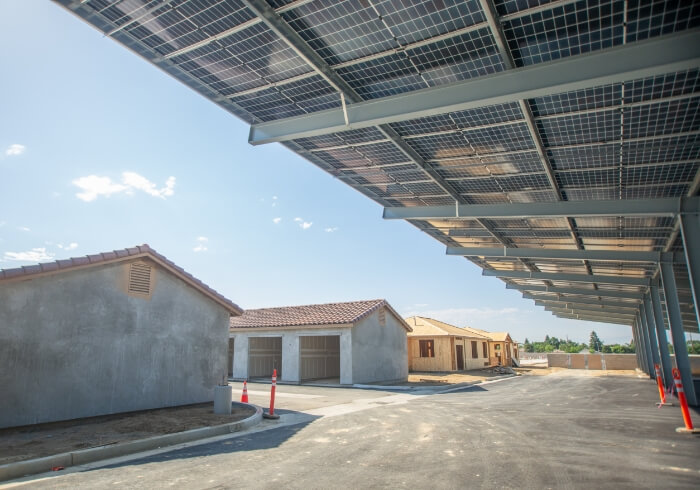
Carport Solar for Multi-Family Housing
A carport alternative to rooftop solar for Title 24 compliance.